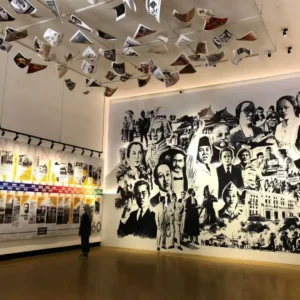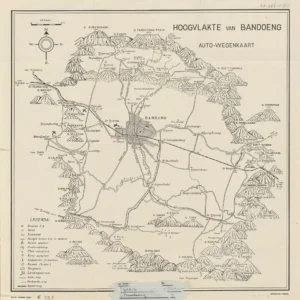
In 1808, the Dutch government led by Herman Wiliam Daendels built the Postal Highway from Anyer-Panarukan and passed through Bandung. The Postal Highway had a huge impact, not only on the development of Java Island in general, but also the cities it passed through. Bandung iss one example. Initially, the Post Road was 11km north of Krapyak, the capital of Bandung Regency at the time. Daendels ordered the 6th Regent of Bandung, R,A Wiranatakusumah II to build the new capital city around the road.
Wiranatakusumah II then chose a location near a spring called Sumur Bandung. In Sunda, Sumur Bandung means wells that are paired of facing each other (from the word bendungan). The two wells are on the west bank of the Cikapundung River. One well is located at Bale Sumur Bandung or the PLN Building for the distribution of West Java and Banten, Jalan Asia Afrika. The other is under the former Miramar shopping complex, Bandung Square. In accordance with the traditional spatial concept, Regent R.A Wiranatakusumah II and a number of his people build a pavilion on the south side of Bandung Square, facing Mount Tangkuban Parahu which is s symbol of the historical beliefs of the Sundanese people. The Great Mosque of Bandung (now Bandung Grand Mosque) was built on the west side of the square, and the market was located on the east side.
During the reign of Regent R.A Wiranatakusumah IV the capital of the Priangan Karesidenn was moved from Cianjur to Bandung based on besluit number 18 dated 17 August 18864, the Priangan Resident House located on Residentsweg (Jalan Pasar Baru, now Jalan Otto Iskandar Dinata) was build in 1867, while the Priangan Resident Office was built on the east side of the Post Road Hotel which later became the Savoy Homann Hotel. On 1 April 1906, Governor General J.B. Van decreed that the City of Bandung be upgraded to the status of City Government (Gementee). Since then, Bandung City was officially separated from Bandung Regency, although the capital of Bandung Regency is still located in Bandung City.
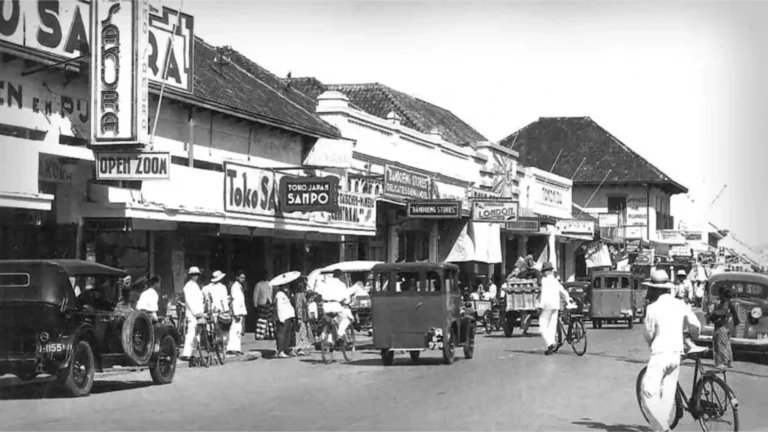
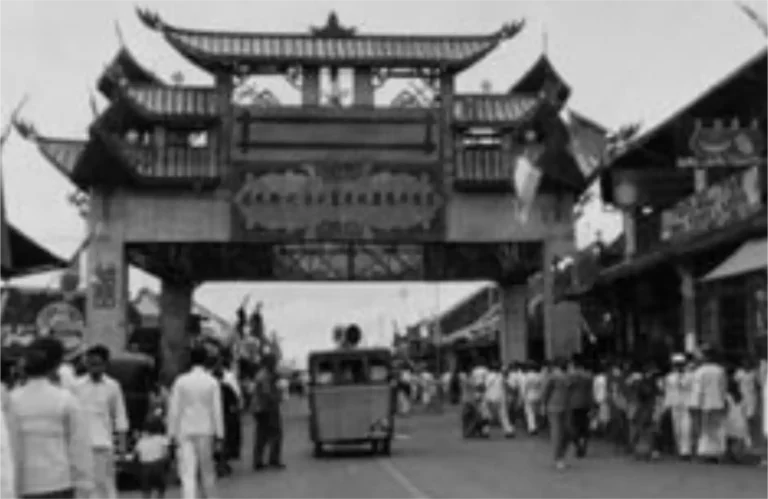
The Chinese first came to Indonesia through the Cheng Hoo expedition in 1405-1433 by opening the silk and ceramic routes. Since then the Chinese began to arrive and build Chinatown on Java Island. The Chinese then migrated to Bandung during the Diponegoro War in 1925. Most of them livedon Jalan Suniaraja and Jalan Pecinan Lama. They settled and made a living until they eventually spread to Jalan Kelenteng in 1885. The first Chinatown on Jalan Kelenteng was marked by the construction of Vihara Setya Budhi.
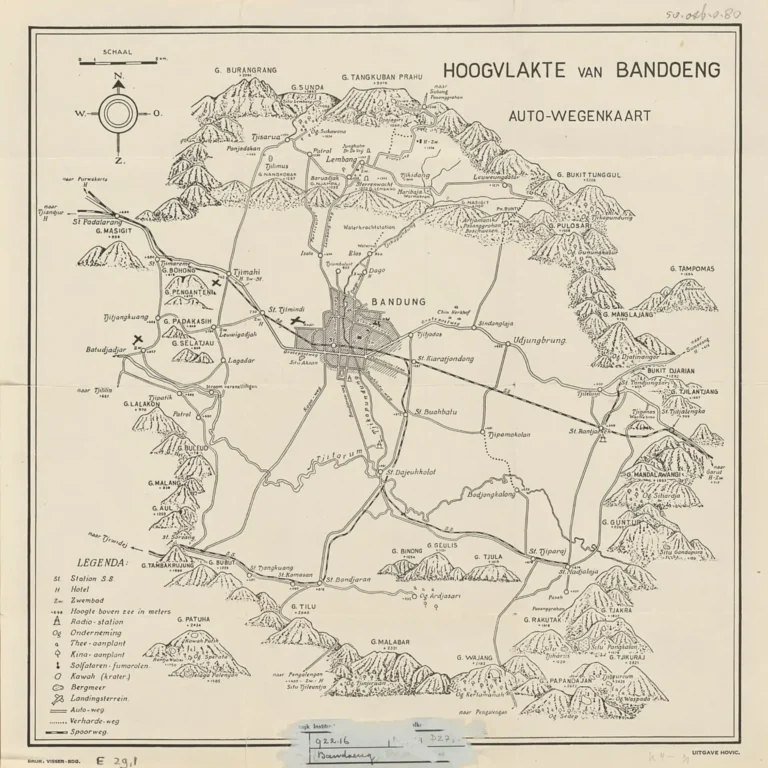
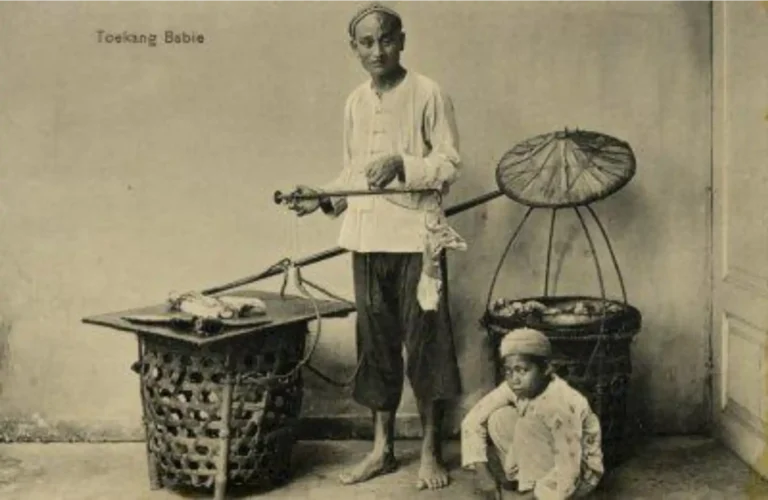
Bandung’s Chinatown flourished in 1905 when Chinese people started trading at Pasar Baru. Tan Suoe How was one of the Chinese who pioneered the shop at Pasar Baru in 1901 and opened the traditional medicine shop Babah Kuya. In this era, every Chinatown was led by a Wijikmeester. Some of them were Thung Pek Koey in Suniaraja, Tan Nyim Coy in Citepus. While the Bandung area was lead by Liutennant Tan Djoen Liong. Some of these leader’s names are now still immortalised as regional names such as Goan Ann and Jap Lun in Andir District.
During the Bandung Lautan Api incident in 1946, the stalls in Pasar Baru were burnt down. At that time Bandung was separated into north and south by a railway that ran from Cimahi to Kiaracondong. The north was controlled by the Dutch and the south by natives and foreigners. Since then, the Chinese have been displaced to Tegalega, Kosambi, Sudirman, and Cimindi. Gradually, after a long time apart, the Chinese and natives reunited. And until now, the harmonious portrait between the Chinese and the natives is still established in Indonesia, especially in Bandung.
The zero kilometre point of Bandung is located at Jl. Asia Africa or right in front of the West Java Provincial Bina Marga Office. The zero kilometre point is amilestone in the history of Bandung. It is said that in 1810, the Governor-General of the Dutch East Indies Herman Willem Daendels, together with Regent Wiranatakusumah II, visited the forest through which the Grote Postweg or Jalan Raya Pos route passed. Daendels stuck his stick and said “Zorg, data ls ik terug kom hier een staad is gebouwd”, which mean “Try, if I return here, in this area a decree has been built” which contains an order to move the centre of the district city government to the area where Daendels stuck his stick.
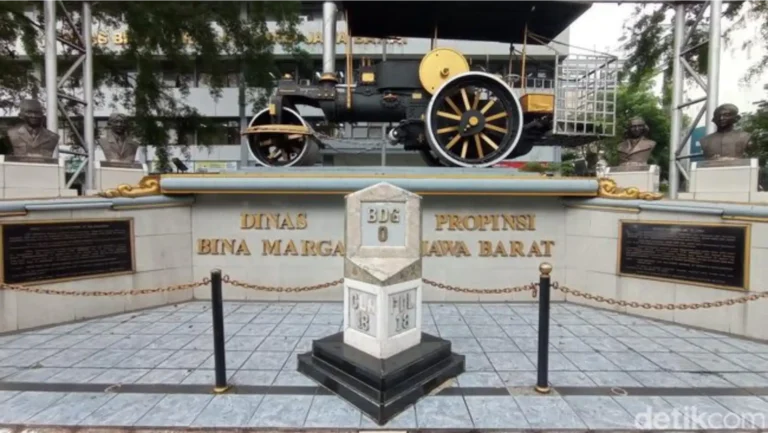
The date of the decree marked the birth of Bandung, and the place where Daendels’s cane was planted became the starting point of the city’s development, now known as Bandung’s zero kilometre point. The zero kilometre monument and the Stoomwals monument are dedicated to the thousands of West Javanese who were victims of force labour during the construction of the Jalan Raya Pos. The zero kilometre monument also replicas of the faces of Daendels, Regent Wiranatakusumah, Soekarno, and the Governor of West Java in 1945, Mas Soetardjo Kertohadikusumo.